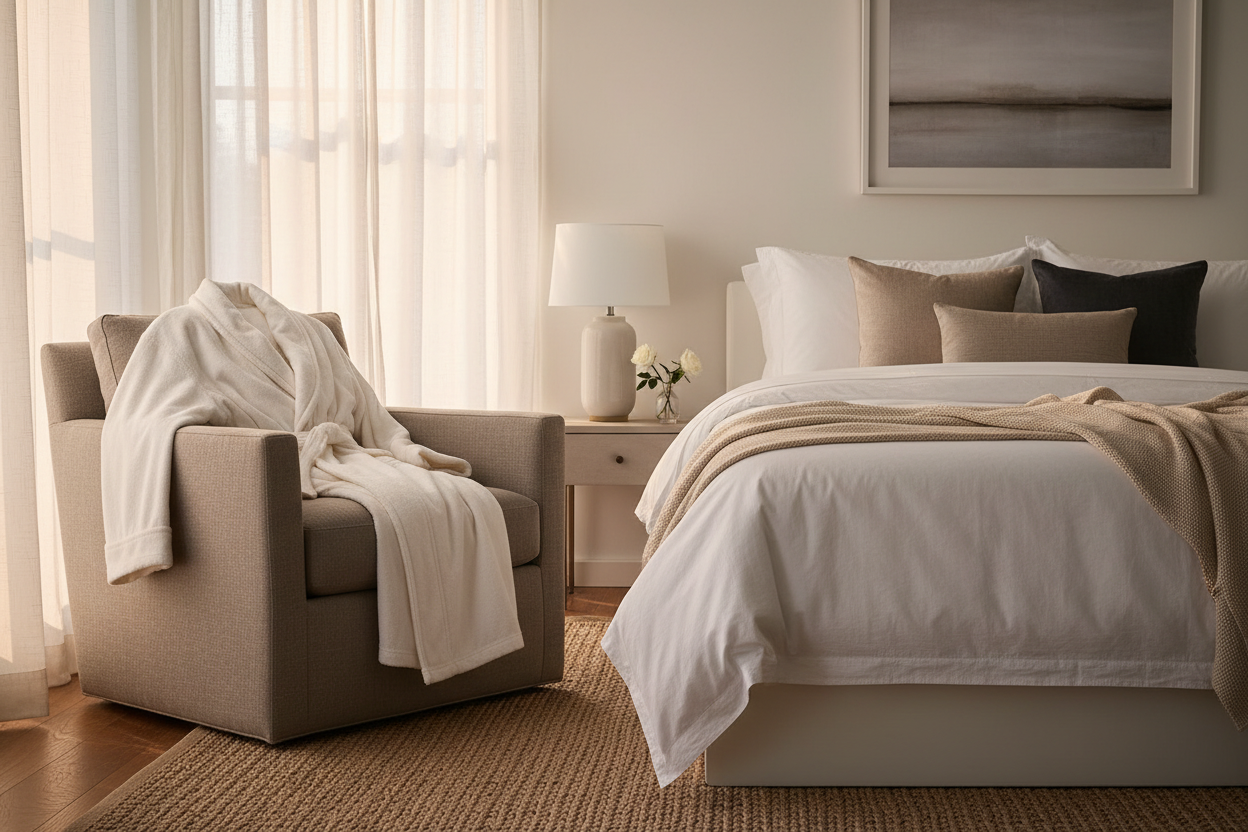
The Best Plush Robes: What "Plush" Actually Means (And How to Find the Real Thing)
We've all seen it. The photos looked luxurious. The description promised cloud-like softness. It arrived, you tried it on, and for about two weeks it felt decent.
Then you washed it.
The pile flattened. The fabric thinned. The "plush" bathrobe became ordinary, then disappointing, then something you stopped reaching for entirely. It's sitting in your closet right now, isn't it?
We hope it's not, but we understand if it still is.
This happens because "plush" has become a marketing term rather than a quality indicator. Brands use it to describe anything vaguely soft, regardless of whether that softness lasts. The result is a market flooded with robes that photograph well and perform poorly. And now, sometimes enriched by AI
Here's how to find a plush robe that actually delivers, wash after wash, year after year.
What "Plush" Actually Means
True plushness comes from three factors working together: fiber density, pile height, and construction quality. Miss any one of these, and the robe won't maintain its feel over time.
Fiber Density
Plushness requires a high concentration of fibers packed into the fabric. This density creates the soft, cushioned sensation against your skin. Cheap robes use fewer fibers spread across more surface area. They feel acceptable initially but have nothing in reserve. Once those sparse fibers flatten or break down, the softness disappears.
Quality plush robes pack more material into the same space. When you pick one up, you notice the weight. Our robes weigh approximately three pounds because density requires material. That weight is what separates a robe you'll love for years from one you'll replace in months.
Pile Height
The "pile" refers to the raised fibers on the fabric surface. Terry cloth achieves its plush feel through looped pile construction, where thousands of small loops create softness and absorbency. Higher, denser loops mean a plusher feel.
The problem: tall pile without adequate density creates a robe that looks plush but collapses quickly. The loops need support from fiber density to maintain their height through washing and wear.
Construction Quality
Even excellent fabric fails in a poorly constructed robe. The seams, hems, and attachment points all affect how the garment holds up. Stress points that unravel compromise the entire piece. Cheap stitching leads to premature wear.
Hotel robes get laundered multiple times per week and need to last for years. That's why properties like Ojai Valley Inn and Ashford Castle test robes extensively before committing. They're evaluating construction as much as fabric.
Why Most "Plush" Robes Disappoint
Understanding why cheap plush robes fail helps you avoid repeating the mistake.
Chemical Softeners
Many inexpensive robes achieve initial softness through chemical treatments applied during manufacturing. These treatments coat the fibers and create a soft hand feel out of the package. The problem: they wash out. By the third or fourth laundry cycle, the chemicals are gone and you're left with the actual fabric quality, which is often mediocre.
This is why so many robes feel great in the store or when they first arrive, then decline rapidly with use.
Loose Construction for Apparent Loft
Cheap robes sometimes create the appearance of plushness through loose, airy construction. The fabric looks fluffy because there's a lot of air between the fibers. But air compresses. After a few washes, that loft disappears and you're left with a thin, flat fabric.
True plush density comes from tightly packed fibers, not air. It weighs more but lasts longer.
Cutting Corners on Materials
Quality terry cloth and microfiber cost more than inferior alternatives. Brands hitting low price points have to compromise somewhere, and materials are usually the first cut. They use thinner yarns, shorter fibers, and looser weaves. The result looks similar to quality fabric in photos but performs noticeably worse in person.
Plush Robe Materials: What Works Best
Different materials achieve plushness in different ways. Here's what to look for.
Terry Cloth
Terry cloth is the classic plush robe material. The looped pile construction creates both softness and absorbency, making it ideal for post-shower use. Quality terry feels substantial and maintains its pile through repeated washing.
What to look for: Weight and density. Quality terry cloth robes feel heavy. The loops should be tight and uniform, not loose or uneven.
Potential issue: Pure terry exteriors can pill over time, especially lower-quality versions. The loops catch on things and begin to unravel.
Microfiber
Quality microfiber is smooth, durable, and resistant to pilling. The fibers are finer than silk, allowing them to be packed densely for a luxurious feel. Microfiber maintains its appearance through heavy use and frequent washing.
What to look for: Density and drape. Quality microfiber has weight and flows nicely. Cheap microfiber feels thin and synthetic.
Potential issue: Microfiber alone isn't as absorbent as terry. It works better as an exterior material than interior.
The Best Combination: Microfiber Exterior with Terry Interior
This dual-layer construction gives you the benefits of both materials. The microfiber exterior provides a smooth, luxurious drape and resists the pilling that can affect pure terry robes. The terry interior delivers the plush, absorbent feel against your skin.
This is the construction we use at Robeworks. It's why our robes work for both the immediate post-shower moment and lounging throughout the morning. The exterior stays pristine while the interior stays soft and functional.
For a deeper comparison of robe fabrics, see our complete material guide.
Cotton
Cotton quality varies enormously. Premium long-staple cotton (Egyptian, Turkish, Pima) creates soft, durable fabric. Standard cotton can feel rough and degrades quickly. Most "plush cotton robes" use lower-grade cotton that doesn't justify the label.
What to look for: Specific cotton type called out (Egyptian, Turkish, Pima). Weight and density. Generic "100% cotton" without further detail usually means lower quality.
How to Identify a Truly Plush Robe
When shopping for a plush robe, use these criteria to separate quality from marketing.
Check the Weight
Quality plush robes are heavy. If the listing includes weight, look for robes in the 2.5 to 3.5 pound range for full-length styles. If you're shopping in person, pick it up. A quality robe has noticeable heft.
Our robes weigh approximately three pounds. That density is what creates lasting plushness.
Look at Construction Details
Examine the seams, belt loops, pockets, and hem. Are they reinforced? Do they look substantial? Cheap robes cut corners on construction because most buyers don't inspect these areas. But construction quality determines how long the robe maintains its integrity.
Research the Materials
Go beyond "plush" and "soft" in product descriptions. What is the actual fabric composition? What's the construction method? Brands confident in their materials will specify them clearly. Vague descriptions often hide inferior quality.
Consider the Source
Where is the robe made? How long has the company been producing robes? Is there evidence of quality control and craftsmanship?
Mass-produced overseas robes optimize for low cost, not long-term quality. Made-to-order robes from established manufacturers, like our Los Angeles workshop, prioritize the finished product over production efficiency.
Read Reviews for Longevity
Initial reviews don't tell you much. Look for reviews from people who've owned the robe for six months or longer. Do they mention how it's held up through washing? Has the plushness lasted? This information matters more than first impressions.
Plush Robes for Different Needs
The best plush robe for you depends on how you'll use it.
For Maximum Plushness: The Shawl Robe
The Shawl Robe delivers the quintessential plush experience. The traditional shawl collar, three-pocket design, and full-length cut create the classic luxury robe silhouette. The substantial weight wraps around you with presence.
For Everyday Versatility: The Classic Robe
The Classic Robe offers the same plush construction in a cleaner silhouette. Hidden side-seam pockets create a sleeker look while maintaining the weight and softness that defines a quality robe. This is our original design and best-seller since 1995.
For Post-Shower Functionality: The Hooded Robe
The Hooded Robe adds practical functionality without sacrificing plushness. The hood helps dry hair and provides extra warmth around the head and neck. The body maintains the same plush construction as our other full-length styles.
For Warmer Weather: The Short Spa Robe
The Short Spa Robe delivers plush quality in a lighter format. The shorter length hits at mid-thigh, providing coverage without bulk. Same construction, same materials, more breathable format for warmer months.
For Men Specifically
All Robeworks robes are unisex, but the weight and construction particularly appeal to men seeking substantial plush robes. The Shawl Robe and Classic Robe both offer the heft that men typically prefer. For sizing guidance, see our men's bathrobe guide.
The Hotel Standard for Plush
Hotels test robes more rigorously than any individual consumer could. Properties like Chateau Marmont, The Mercer, and Mandarin Oriental evaluate robes through dozens of commercial laundry cycles before committing to a supplier.
They're specifically testing for plush retention. Does the robe maintain its softness and pile height after aggressive laundering? Do the fibers hold up to industrial washing? Does the construction stay intact?
We've been passing these tests for 30 years. The robes that create memorable moments for hotel guests are the same robes we make for home use. Same materials, same construction, same lasting plushness.
Why Plush Quality Matters
A plush robe you love becomes part of your daily routine. It's what you reach for every morning, what makes the post-shower moment comfortable, what you lounge in on slow weekends.
A disappointing robe becomes clutter. It sits unused, a reminder of money wasted and expectations unmet.
The difference in price between a robe that delivers and one that disappoints is usually modest compared to the difference in experience. A quality plush robe costs more upfront but provides years of daily comfort. A cheap one costs less initially but needs replacing within a year.
The robe you'll actually use, the one that maintains its plush feel through hundreds of washes, is worth the investment.
Shop the Robeworks Collection
Experience the plush difference — crafted in America with dual-layer microfiber and terry construction.


Leave a comment
This site is protected by hCaptcha and the hCaptcha Privacy Policy and Terms of Service apply.