The Environmental Impact of Fast-Fashion Bathrobes vs. Made-to-Order
It's on almost everyone's minds, especially ours. Environmental impact in the modern world of ecommerce, direct to consumer brands that are shipping orders within seconds of receiving them.
We're in the bathrobe business, so let's focus on that. Here's some cold hard facts. Fast-fashion bathrobes produce approximately 135 kg of CO2e over a ten-year period compared to 45 kg for a single made-to-order robe. The difference comes from three primary factors: replacement frequency, manufacturing location, and inventory waste. When you account for the fact that cheap robes need replacing every two to three years while quality robes last a decade or more, the environmental math changes dramatically.
The average American throws away 81.5 pounds of clothing each year. Bathrobes, towels, and other home textiles contribute significantly to that figure. Understanding the true environmental cost of what hangs in your bathroom requires looking beyond the price tag and really looking at the full lifecycle of the product.
Which, if you can't tell, is a lot. Here we go.
What Fast Fashion Doesn't Tell You About Cheap Bathrobes
In the past 50 years there were, essentially, 3 main phases of the apparel industry. First was the luxury import markets of the 70s and 80s, after the dawn of the 747, to the malls of America. Then, in the 1990s, NAFTA opens the North American borders, allowing manufacturing and goods to flow freely across the continent. And finally, in the mid 2010s, the combination of direct to consumer websites powered by wholesale retailers like Ali Baba birthed a whole new industry of e-commerce and the drop shipping economy. Each of these phases are essentially the shrinking of time to market and time to purchase, creating the modern Amazon-powered expectation of order today, arrive tomorrow.
How we got here, in more detail, is for another story. But this has fundamentally changed how we, as modern consumers, interact with goods and clothing.
The textile industry generates roughly 1.2 billion tonnes of CO2 equivalent annually, representing 8 to 10 percent of global greenhouse gas emissions. That's more than international aviation and shipping combined. A significant portion of this impact comes from the production of inexpensive garments designed to be replaced frequently.
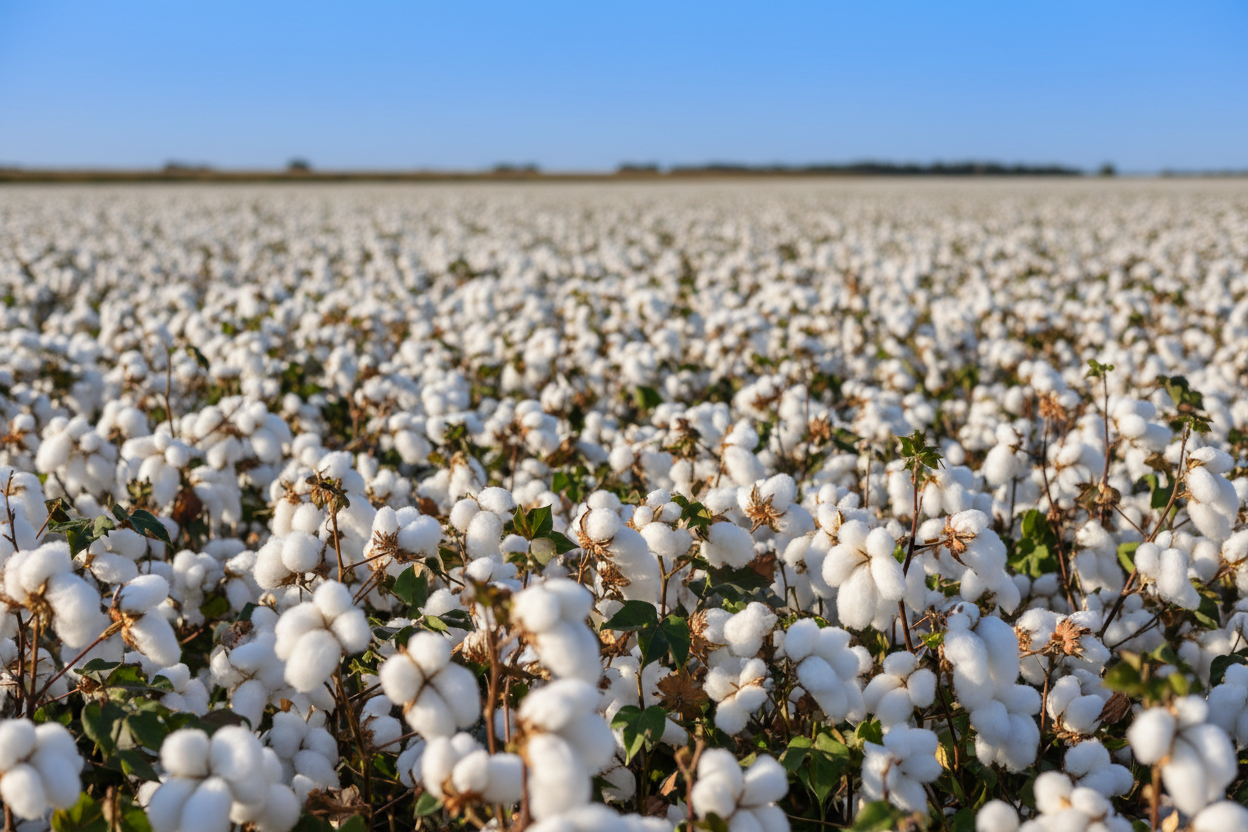
A typical fast-fashion bathrobe begins its life as petroleum (for polyester) or water-intensive cotton. Producing one kilogram of cotton requires 10,000 to 20,000 liters of water depending on growing location and methods. Synthetic fibers carry their own burden: polyester production emits approximately 5.5 kg of CO2e per garment compared to 2.1 kg for cotton.
Manufacturing adds substantially to this footprint. Most inexpensive bathrobes are produced in China, Bangladesh, or other countries where factories rely heavily on coal-powered energy. The processing phase, which includes dyeing and finishing, accounts for roughly 32 percent of a garment's total emissions and contributes to 20 percent of global industrial water pollution.
Then comes shipping. A container ship emits approximately 10 to 40 grams of CO2 per metric ton of cargo per kilometer. A bathrobe traveling from a factory in China to a warehouse in the United States covers roughly 11,000 kilometers by sea, then additional distance by truck to reach distribution centers and ultimately your door. Air freight, increasingly common for fast-fashion restocking, emits 500 grams of CO2 per metric ton per kilometer, roughly 20 to 30 times more than ocean shipping.
The final factor is lifespan. Industry data suggests clothing is now worn 36 percent fewer times than it was 15 years ago. Many garments are worn only seven to ten times before being discarded. For bathrobes, the average replacement cycle for inexpensive options runs two to three years. Over a decade, that means purchasing four to five robes, each carrying its own manufacturing and shipping footprint.
Of the 100 billion garments produced globally each year, 92 million tonnes end up in landfills. That's equivalent to a garbage truck full of clothes being dumped every second. In the United States alone, 66 percent of discarded textiles go to landfills, where synthetic materials can take 200 years or more to decompose.
How Made-to-Order Manufacturing Reduces Environmental Impact
The made-to-order model represents a fundamental departure from conventional fashion production. Rather than manufacturing thousands of units based on projected demand, made-to-order companies produce each item only after a customer places an order.
Zero Inventory Waste
The fashion industry's dirty secret is overproduction. Every year, 30 percent of clothes produced are never sold. That may be underselling it as that's what's reported. This unsold inventory often ends up incinerated or landfilled, representing a complete waste of the water, energy, and materials used to produce them. Deadstock often times becomes trash and not reused.
Made-to-order eliminates this waste entirely. Every robe has a buyer before production begins. There are no warehouses full of unsold inventory, no end-of-season sales trying to move excess stock, no destruction of merchandise to protect brand value.
At Robeworks, we utilize this model to reduce waste and boost product quality. If we manufactured like conventional fashion brands, producing inventory based on demand forecasts, we would have created thousands of robes destined for landfills. Instead, every robe we've ever made was ordered by someone who wanted it.
Domestic Manufacturing Advantage
Location matters for environmental impact. A robe manufactured in Los Angeles and shipped to a customer in New York travels roughly 4,000 kilometers by ground. A robe manufactured in China and shipped to the same customer travels 11,000 kilometers by sea plus additional ground transport on both ends.
Container ships are the most carbon-efficient form of long-distance freight, but that efficiency advantage disappears when you're shipping across an ocean versus across a continent. Domestic manufacturing can reduce transportation emissions by 60 to 80 percent compared to overseas production.
There's also the question of energy sources. Manufacturing in countries with cleaner electrical grids produces lower emissions. The United States has steadily increased its renewable energy share, while many textile-producing nations still rely heavily on coal. California, where Robeworks operates, generates over 30 percent of its electricity from renewable sources.
Beyond carbon, domestic manufacturing offers transparency and regulations. You can visit the factory. You can verify working conditions. The supply chain is shorter and more accountable. This matters for people who care not just about environmental impact but about the full ethical picture of their purchases, a growing concern in the modern economy.
Design for Longevity
The most overlooked environmental factor in any product is how long it lasts.
Zara and H&M (we love them, but we had to pick someone) are the masters of quick, off the rack clothing that can be worn that day but probably won't be wearable the next. That leads to a discarded (read: waste) piece of apparel.
A bathrobe designed to be inexpensive prioritizes low material costs and fast production. Seams may be single-stitched. Fabric density is reduced to save weight. The result is a product that degrades quickly with use and washing.
A bathrobe designed for longevity uses denser fabrics, reinforced construction, and higher-quality materials. The same hotels that demand luxury for their guests also demand durability for their operations. Properties like Ojai Valley Inn, Chateau Marmont, and Ashford Castle have used our robes for decades because they survive commercial laundering and daily guest use.
When a robe lasts 15 years instead of 2.5 years, you're reducing your total consumption by a factor of six. That single purchase replaces five or six fast-fashion alternatives, each with its own manufacturing footprint, shipping emissions, and eventual landfill contribution.
The Numbers: A Complete Carbon Footprint Comparison
Lifecycle assessment methodology examines environmental impact from raw material extraction through disposal. Here's how a typical fast-fashion bathrobe compares to a made-to-order alternative over a ten-year period.
Fast-Fashion Robe (replaced every 2.5 years = 4 robes over 10 years):
| Stage | Per Robe | Total (4 robes) |
|---|---|---|
| Raw materials | 8 kg CO2e | 32 kg CO2e |
| Manufacturing | 12 kg CO2e | 48 kg CO2e |
| Transportation | 6 kg CO2e | 24 kg CO2e |
| Use phase (washing) | 5 kg CO2e | 20 kg CO2e |
| Disposal | 3 kg CO2e | 12 kg CO2e |
| Total | 34 kg CO2e | 136 kg CO2e |
Made-to-Order Robe (no replacement needed):
| Stage | Total |
|---|---|
| Raw materials | 10 kg CO2e |
| Manufacturing | 15 kg CO2e |
| Transportation | 2 kg CO2e |
| Use phase (washing) | 15 kg CO2e |
| Disposal | 3 kg CO2e |
| Total | 45 kg CO2e |
The made-to-order robe has higher per-unit emissions in some categories. Better materials require more energy to produce. Higher-quality manufacturing takes more time and resources. But these investments pay environmental dividends through longevity.
Over ten years, the fast-fashion approach produces three times the carbon emissions of the made-to-order alternative. Accounting for the fact that many quality robes last 15 to 20 years, the difference becomes even more pronounced.
Key Finding: When measured per year of use, the made-to-order robe produces 67 percent less CO2e than its fast-fashion counterpart.
Beyond Carbon: Water, Waste, and Worker Welfare
Carbon emissions tell only part of the environmental story.
Water Usage
Textile production is the second-largest industrial consumer of water globally. Cotton cultivation is particularly intensive, and the dyeing process requires substantial water inputs while generating polluted wastewater.
Manufacturing in the United States means adhering to EPA wastewater treatment standards. Facilities must treat discharge water before releasing it. In countries with weaker regulations, untreated dyes and chemicals often flow directly into rivers and groundwater. An estimated 20 percent of global industrial water pollution comes from textile dyeing and finishing.
Microplastic Pollution
Every time you wash a synthetic garment, it releases microfibers into the water system. Up to 500,000 tons of microfibers enter the ocean each year from washing clothes, equivalent to 50 billion plastic bottles. Polyester robes, common in fast fashion due to low material costs, are significant contributors.
Blended fabrics using natural fiber interiors reduce microplastic shedding. Our robes use a microfiber exterior for durability and smooth drape combined with a terry cloth interior for absorbency, a construction that minimizes synthetic fiber contact with water during washing.
Labor Conditions
Environmental sustainability and social sustainability are connected. The same cost pressures that drive manufacturers to use cheaper materials and faster production methods also drive them toward lower labor costs.
The U.S. Department of Labor has found that 80 percent of garment contractors in some regions violate minimum wage and overtime laws. One investigation found workers paid $1.58 per hour in a state with a $15 minimum wage.
Manufacturing in Los Angeles means workers earn living wages, work in safe conditions, and are protected by comprehensive labor laws. This isn't tangential to environmental impact. Operations that cut corners on labor often cut corners everywhere.
The Cost-Per-Wear Calculation
Sustainability and financial sense align more often than people realize.
Fast-Fashion Robe:
- Purchase price: $35
- Lifespan: 2.5 years
- Total cost over 10 years: $140 (4 robes)
- Carbon footprint: 136 kg CO2e
- Cost per year: $14
Made-to-Order Robe:
- Purchase price: $175
- Lifespan: 15+ years
- Total cost over 10 years: $175 (1 robe)
- Carbon footprint: 45 kg CO2e
- Cost per year: $11.67
The premium robe costs less per year of ownership while producing one-third the emissions. This calculation doesn't account for the qualitative difference in daily experience, the satisfaction of wearing something well-made, or the knowledge that your purchase supports domestic manufacturing and fair labor practices.
Making Sustainable Choices
Choosing a sustainable bathrobe doesn't require specialized knowledge. A few questions point you in the right direction.
Where is it made? Domestic manufacturing typically means lower shipping emissions and higher labor standards. Look for specific locations, not vague "designed in USA" language.
How long will it last? Read reviews for durability mentions. Check if the company supplies hotels or commercial clients, which demand products that survive heavy use.
What's the company's production model? Made-to-order means no inventory waste. If a company maintains warehouses full of pre-made inventory, some portion of that will eventually become landfill.
Can you verify their claims? Transparent companies share factory information, material sourcing, and production processes. Vague sustainability language without specifics is often greenwashing.
What's the true cost per year? Divide the price by expected lifespan. The calculation often reveals that paying more upfront means paying less over time.
For those who already own robes, proper care extends lifespan significantly. Washing in cold water, avoiding excessive heat in the dryer, and treating stains promptly can add years to a quality garment. When a robe finally reaches end of life, donation is preferable to disposal. Many textile recycling programs accept home textiles.
The Future of Sustainable Manufacturing
The most sustainable bathrobe isn't the one marketed with eco-friendly labels all over their website. It's the one you'll still be wearing a decade from now.
Fast fashion has conditioned consumers to view clothing as disposable. The environmental consequences of that mindset are becoming impossible to ignore, not just in the third world but in every major metropolis Landfills overflow with clothing. Microplastics contaminate nearly everything around us. And carbon emissions from textile production rival if not exceed those from major transportation sectors.
Taking steps to change this isn't a radical idea. Buy less. Buy better. Choose products made to last by companies that operate transparently. Consider the full cost, environmental and financial, not just the price tag.
We've been making bathrobes in Los Angeles for 30 years using the made-to-order model. Every robe is crafted after it's ordered, by workers earning fair wages, using materials chosen for durability rather than cost minimization. Our hotel clients have proven these robes last: properties have used the same robes for over a decade of daily guest use.
Learn more about how Robeworks robes are made
References
-
"The Aftermath of Fast Fashion" - Boston University School of Public Health
-
"85% of Clothes Discarded Annually" - Environment + Energy Leader
-
"Circular Economy and Sustainability of the Clothing and Textile Industry" - PMC
-
"How Much Does the Shipping Industry Contribute to Global CO2 Emissions?" - Sinay
-
"Shift from Air to Sea Freight" - Climate Action Accelerator
-
"Uncertainty in Carbon Footprint Accounting of Textile Products" - ScienceDirect
-
"Life Cycle Assessment for Textiles and Clothing" - Carbon Trail
-
"Lifecycle Impact on Environment of Textiles and Garments" - Sofeast
-
"Fashion's New Sustainability Play: Made-to-Order Production" - Glossy
-
"Made to Order Clothing Brands for Sustainable Style" - The Honest Consumer
-
"Can Made-to-Order Brands Slow Down the Fashion System?" - Atmos
Shop the Robeworks Classic Robe - Made to Order, Made to Last


Leave a comment
This site is protected by hCaptcha and the hCaptcha Privacy Policy and Terms of Service apply.